


ACADEMIC MEDICINE TRACK
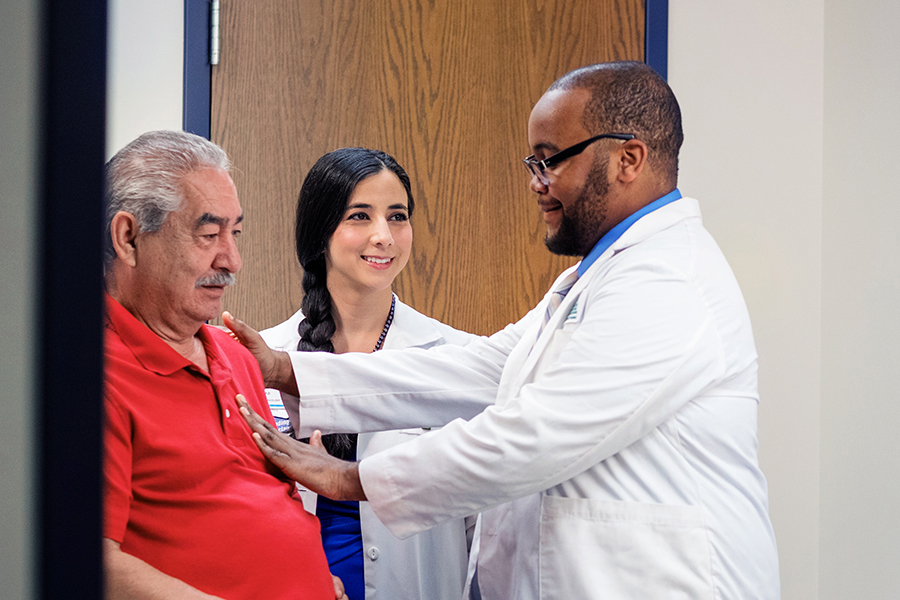
The purpose of this track is to prepare the family medicine resident for a career in academics, both at the residency and medical student levels. Because a component of this track will require supervision of both resident and student learners, residents applying to this track must be in good standing at the program. Resident acceptance will be at the discretion of the program director. By the completion of the academic track, residents will be able to:
Demonstrate effective teaching methods for various settings, including one-on-one, small group, and large classroom environments. (MK-1, MK-2, PBLI-1)
- Design, implement, and evaluate educational programs and curricula that meet the learning needs of medical students and residents in family medicine. (PBLI-1, SBP-2, SBP-3)
- Provide constructive feedback to learners and colleagues using standardized feedback tools. (PBLI-2)
- Effectively contribute to program educational projects and committees. (SBP-2)
- Engages in patient safety and quality improvement education and projects in the inpatient and outpatient setting. (SBP-1)
- Purposefully engage in scholarly activities related to topics of interest. (MK-1, PBLI-1)
- Demonstrate organizational and communication skills required of faculty members. (PROF-1, PROF-2, ICS-3)
- Engages in recruitment process including interviewing candidates and giving appropriate feedback. (ICS-2)
COMMUNITY MEDICINE TRACK
The Community Medicine Track curriculum aims to help residents develop the skills to become a community-responsive physician. Experiences include opportunities for community health assessment, engagement and development of new and existing community partnerships, health improvement program planning and evaluation, and clinical skill development in areas of need for underserved populations. The track includes a community-based project, intended to meet residents’ scholarly project requirements, based on a topic of interest and done in collaboration with a community partner the resident has developed a relationship with. The track is designed to be flexible enough to meet residents’ individual learning goals. It allows for selection between relevant electives, resident identification and development of a project focus area, and supports opportunities for further enrichment such as additional training.
HOSPITALIST TRACK
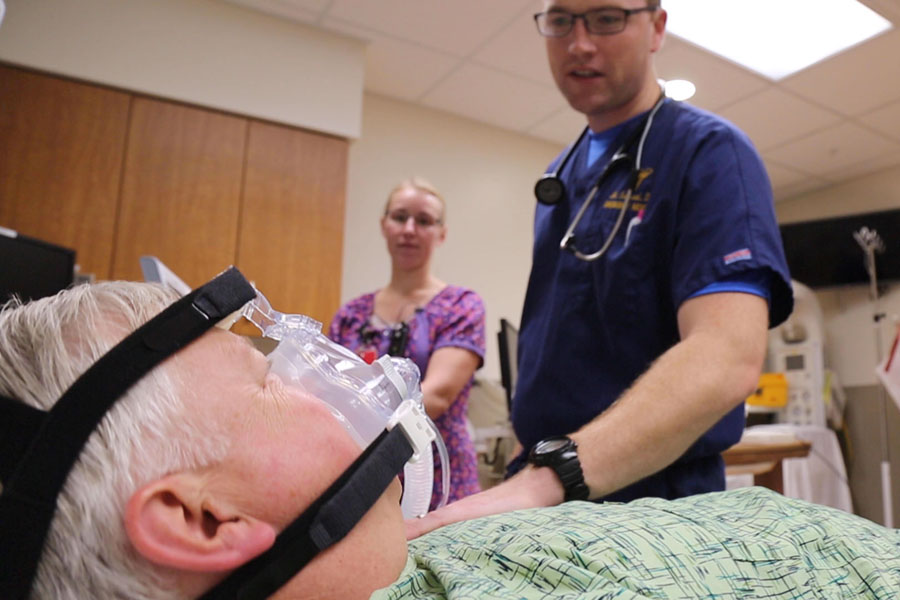
The purpose of the Family Medicine Hospitalist Track is to provide structured, advanced training in the care of hospitalized patients with the overarching goal of preparing residents for independent practice as hospitalists after completing their residency. The curriculum is designed to develop proficiency in the diagnosis and management of complex acute and chronic conditions encountered in hospitalized adults. Residents will gain expanded exposure to high-acuity care environments, including internal medicine and critical care. In addition, participants will receive longitudinal mentorship from experienced hospitalists, engage in scholarly activities such as quality improvement and patient safety initiatives, and receive mentorship to prepare them for independent practice.
MATERNITY CARE TRACK
The inherent flexibility in this track allows you to advance your maternity care training to match the depth of desired learning. Our model has inspired many other programs to follow suit. Whether you choose our Standard Maternity Track or pursue the advanced option, you will experience a well rounded education.

URGENT CARE TRACK
- Prepare you for future career in an urgent care setting.
- Increase your knowledge and skills in treating specific conditions frequently seen in urgent care settings.
- Increase your knowledge and skills doing procedures frequently required in urgent care.
- Give you a “toolbox” of resources for treating patients now and throughout your career.
SPORTS MEDICINE TRACK
The Sports Medicine Track is designed to provide learning experiences in a variety of settings that will give residents expertise in the diagnosis, prevention, treatment, and rehabilitation of common musculoskeletal conditions that affect athletes. Our residency’s sports medicine fellowship-trained faculty are team physicians for scholastic, collegiate and professional sports teams including the Milwaukee Bucks and the Milwaukee Brewers as well as for the Milwaukee Ballet. Upon completion of the track, residents will feel well prepared for applying to a Sports Medicine Fellowship if desired.

OSTEOPATHIC TRAINING
- Capitalizes on long-standing traditions of service
- Allows for continuous OMT training in one Residency
- Provides flexibility for the osteopathic resident to learn how to integrate OMT into practice
- Provides ample opportunities to serve a diverse patient population and work with a variety of specialists within a large healthcare system
ADDICTION MEDICINE TRAINING
Residents will have an opportunity to gain experience in treating patients with opioid use disorder clinics at our Family Health Centers. There is a critical shortage of physicians capable of caring for patients with severe alcohol use disorder or opioid use disorder. The Substance Abuse and Mental Health Services estimates only 1 in 10 patients with addiction have adequate access to addiction treatment in the US. In response to this crisis, our program will provide comprehensive addiction medicine training for all of our residents including how to prescribe Medication- Assisted Treatment (MAT).

PROCEDURAL TRAINING
A Foundation in the Basics and Opportunity for More
All residents in our program become proficient in a number of basic procedures. Residents are taught by faculty who practiced in these procedures and experienced in communicating the required skills and knowledge. The procedures we consider “basic” include:
- ECG performance and interpretation
- Anoscopy
- Upper and Lower extremity splint
- Joint injection/Aspiration
- Newborn Circumcision
- Skin tag removal
- Biopsies (punch, shave) skin including vulvar biopsy /li>
- Biopsy – Excisional
- Destruction of skin lesion (including warts)
- Remove ingrown nail or full toenail
- Incision and drainage of abscess, including paronychia
- Simple laceration repair with sutures
- Endometrial biopsy/sampling
- Papsmear
- Intrauterine device insertion
- Intrauterine device removal
- Contraceptive implant insertion
- Contraceptive implant removal
- ACLS, ALSO, NRP initial certification
- Imaging interpretation-xrays included
- Point of Care Ultrasound (POCUS)

